Describe the Assumptions for Using the Z-table
For example a Z-score of -153 has an area of 00630 to the left of it. Data are interval 2.

Pin On Difference Between
In other words pZ.

. For example the area to the left of z 109 is given in the table as 8621. The value in the table is 8944 which is the probability. When you do know the population standard deviation you can define the confidence interval as a 1-sample z test and use z tables to construct the confidence interval.
For z-scores it always holds by definition that a score of 15 means 15 standard deviations higher than average. Hence we get the score as 011507. This type of test makes the following assumptions about the data.
The observations in one sample are independent of the observations in the other sample. The following table shows the area under the curve to the left of a z-score. To find a specific area under a normal curve first find the z-score of the data value and then use a Z-Score Table to find the area.
A z-score equal to 2 signifies 2 standard deviations greater than the mean. Use Z-table to see the area under the value x In the Z-table top row and the first column corresponds to the Z-values and all the numbers in the middle corresponds to the areas. A 10 year old boy whose height is 62 inches has a z-score of 20 since 62 is 2 standard deviations above 58.
One-sample Z tests are considered robust for violations of normal distribution. Z-tests are closely related to t-tests but t-tests are best performed when an experiment has a small sample size. There are two methods to read the Z-table.
For example suppose a data set consists of the heights of 10 year old boys. Zoe z-score 125 To use the z-score table start on the left side of the table go down to 12. The populations from which the samples are taken must be normally distributed and the population standard deviations must be know or the sample sizes must be large ie.
If the original distribution is normal then the Z-score distribution will be normal and you will be dealing with a standard normal distribution. The participants are randomly selected. To find out the answer using the above Z-table we will first look at the corresponding value for the first two digits on the Y axis which is 12 and then go to the X axis for find the value for the second decimal which is 000.
The standard score does this by converting in other words standardizing scores in a normal distribution to. The formula for calculating a z-score is is z x-μσ where x is the raw score μ is the population mean and σ is the population standard deviation. Since the total area under the bell curve is 1 as a decimal value which is equivalent to 100 we subtract the area from the table from 1.
The samples from each population must be independent of one another. Z-score formula in a population. So the raw score 62 has a z-score of 20.
Sample Ædistribution of means Test Assumptions. The 75th percentile b. Assumptions for the z-test of two means.
Read more as mentioned earlier are the statistical calculations that can be used to compare population. The distribution of the population of interest must be approximately normal. Assuming a normal distribution and using z-Tables find the z-score corresponding to a.
The standard score more commonly referred to as a z-score is a very useful statistic because it a allows us to calculate the probability of a score occurring within our normal distribution and b enables us to compare two scores that are from different normal distributions. 1 Positive Z- score Table. If however the original distribution is skewed then the Z-score distribution will also be skewed.
Z-test Formula Z-test Formula Z-test formula is applied hypothesis testing for data with a large sample size. Usage of z -Table. The 25th percentile c.
Meeting the assumptions improves the quality of research but not meeting the assumptions doesnt necessarily invalidate research. The dependent variable is assessed using a scale measure. The lifetimes of batteries in a certain application are normally distributed with mean 50 hours and standard deviation 5 hours.
At the top of the table go to 005 this corresponds to the value of 12 05 125. A positive Z-score means that the observed value is above the mean of total. The histogram below illustrates this.
A z-score greater than 0 represents an element greater than the mean. An Example μ 1565 1565 σ 146 M 15611 N 97 1. Try solving this yourself for practice.
Populations distributions and assumptions Populations. The second assumption made is. This means that the assumption can be violated without serious error being introduced into the test.
Both samples are approximately normally distributed. A z-score equal to 1 represents an element which is 1 standard deviation greater than the mean. It denotes the value acquired by dividing the population standard deviation from the difference between the sample mean and the population mean.
The assumption for a t-test is that the scale of measurement applied to the data collected follows a continuous or ordinal scale such as the scores for an IQ test. Suppose the mean of that data set is 58 inches and the standard deviation is 2 inches. A Z-Score Table is a table that shows the percentage of values or area percentage to the left of a given z-score on a standard normal distribution.
The central limit theorem tells us that if our. 1All students at UMD who have taken the test not just our sample 2All students nationwide who have taken the test Distribution. Thus the area to the right of z 109 is 1 - 8621.
N 1 30 and n 2 30. The assumptions of the one-sample Z test focus on sampling measurement and distribution. What is P Z 120 S ame as above using the other table.
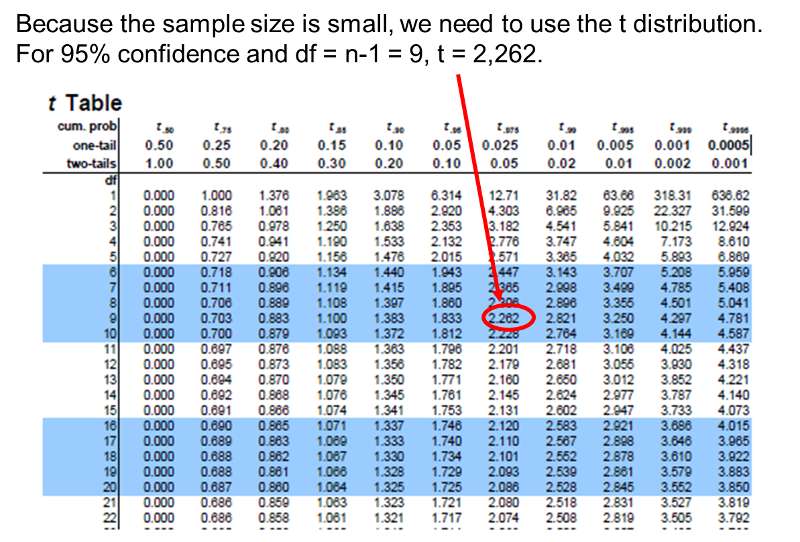
A z-score equal to 0 represents an element equal to the mean. A two sample t-test is used to test whether or not the means of two populations are equal. If you dont know the population standard deviation then you define the confidence interval as a 1-sample t test and you would use t tables to construct a confidence interval.
Uses 1 Z-Test. Z-tests assume the standard deviation is known while t-tests assume it is unknown. As the formula shows the z-score is simply the raw score minus the population mean divided by the population standard deviation.
If a variable is roughly normally distributed z-scores will roughly follow a standard normal distribution. You can then make assumptions about the proportion of observations below or above specific Z-values. The assumptions are listed below.

Pin On Ai Ml Dl Nlp Stem
Confidence Intervals
Hypothesis Testing Along With Type I Type Ii Errors Explained Simply Hypothesis Type I Data Science
0 Response to "Describe the Assumptions for Using the Z-table"
Post a Comment